
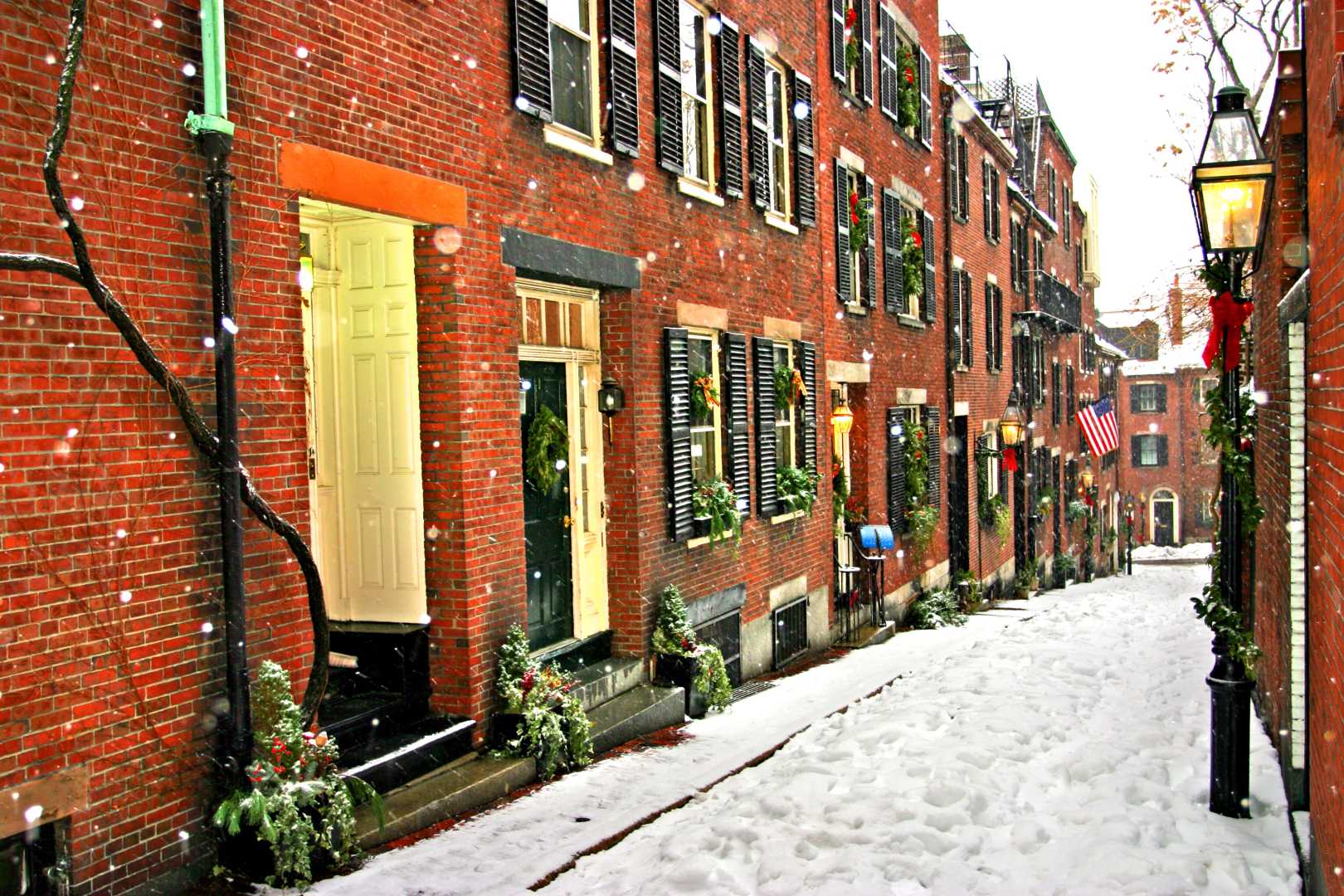
Boston winters are hard on commercial buildings. Rain, snow, ice and repeated freeze-thaw cycles find every weak spot in a building’s exterior, and small leaks that seem minor in October can turn into major repairs by March.
For property managers, condo associations and commercial building owners, the best time to deal with water problems is before the first hard freeze. Here’s what to look for, why winter makes it worse, and how commercial waterproofing and building restoration can protect your property.
Why winter makes small leaks expensive
When water gets into masonry, mortar joints, sealant gaps or roofing, it doesn’t stay put. As temperatures drop below freezing, that water expands as it turns to ice. When it thaws, it moves deeper into the wall. Boston goes through this freeze-thaw cycle many times each winter.
Over a season, that process can crack brick and stone, push out mortar, loosen sealants, and rust steel lintels and anchors inside the wall. Meanwhile, water that reaches the interior can damage insulation, finishes and tenant spaces, and lead to mold.
Where commercial buildings usually leak
On commercial and multifamily buildings, water most often gets in at a few predictable places:
- Roofs and roof edges: worn membranes, failed flashing at parapets, and clogged drains that let water pond.
- Masonry walls: cracked brick, deteriorated mortar joints and open gaps at copings and sills.
- Windows and doors: failed sealant and missing or damaged flashing around openings.
- Balconies, terraces and roof decks: waterproofing that has broken down under the walking surface.
- Below-grade walls and foundations: water entering basements, garages and lower levels.
- Joints between materials: wherever brick meets metal, glass meets masonry, or an addition meets an older building.
Because water travels inside walls, the stain on a ceiling is often far from where the water actually entered. That’s why a proper investigation matters before any repair.
What commercial waterproofing and restoration involves
A good commercial waterproofing contractor starts by finding the source, not just patching the symptom. Depending on the building, that may include a close inspection of the exterior, water testing at suspected leak points, and checking the roof, flashing and drainage.
From there, repairs typically include some combination of:
- Repointing deteriorated mortar joints and repairing or replacing damaged brick and stone
- Replacing failed sealants at windows, doors and expansion joints
- Repairing or installing flashing at openings, parapets and transitions
- Waterproofing balconies, terraces, roof decks and below-grade walls
- Restoring facades and exterior details on older and historic buildings
The goal is a building envelope that keeps water out as a complete system, rather than a series of patches that fail one after another.
A pre-winter checklist for property managers
Before the cold sets in, walk the property or have a professional do it, and look for:
- Water stains on ceilings or walls, especially on top floors and below windows
- Cracked or missing mortar and spalling (flaking) brick
- Gaps or cracking in caulk around windows, doors and joints
- Clogged roof drains, gutters and downspouts
- Ponding water on flat roofs, balconies or terraces
- Rust staining below lintels or metal railings
- Damp or musty smells in basements and lower levels
If you find any of these, it’s worth having the building assessed before winter, while exterior repairs are still practical to schedule.
Commercial waterproofing and building restoration in Boston
Abacus Builders provides commercial waterproofing, masonry restoration and full building envelope restoration for commercial, condominium and multifamily buildings across Boston and MetroWest. From leak investigation to facade restoration, we find where water is getting in and fix it at the source.
Planning ahead of winter? Contact Abacus Builders to schedule an assessment of your building.